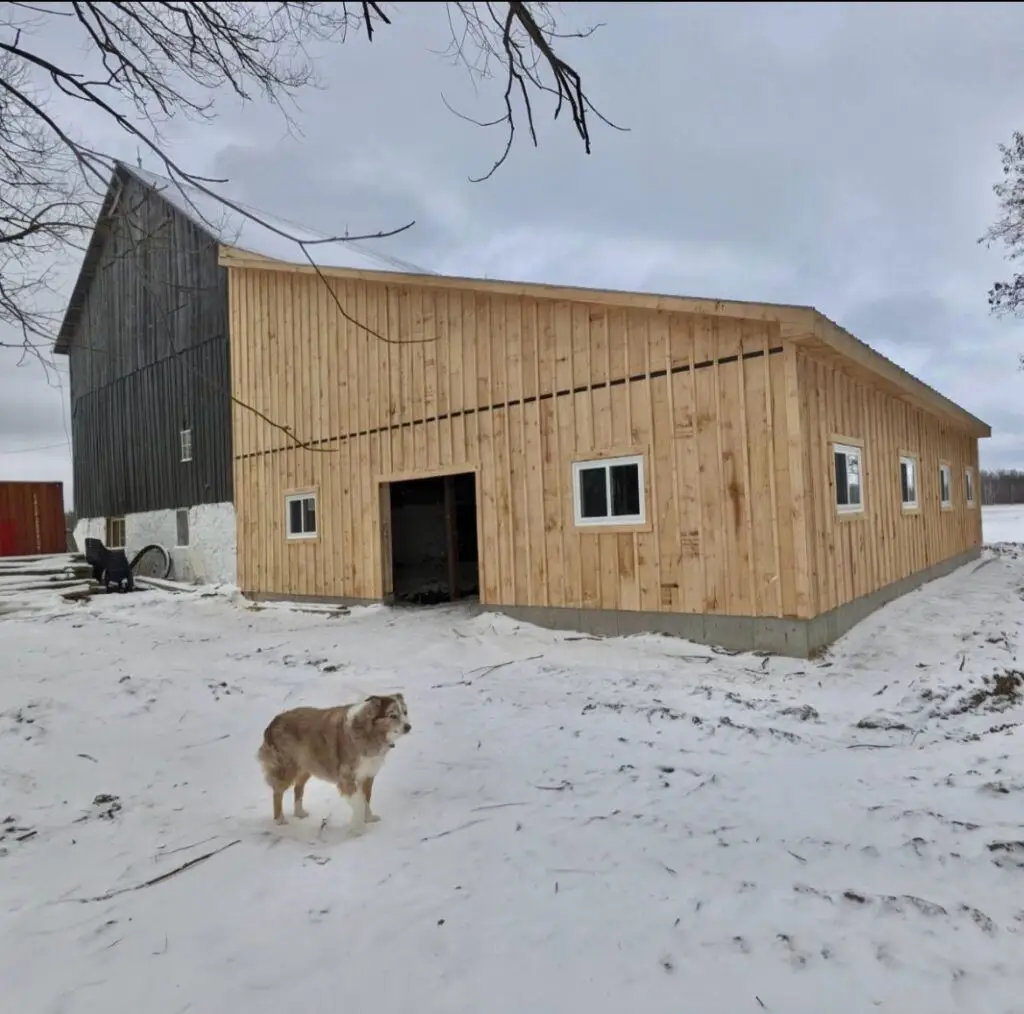
October brings crisp mornings, falling leaves, and the clear signal that winter is around the corner. For owners of heritage barns, riding arenas, feed silos, and commercial outbuildings, this month is your final operational window to prepare physical assets for freezing rain, heavy snow loads, and severe freeze-thaw cycles.
When water enters a crack in wood siding or under a metal lap seam, freezing temperatures cause that water to expand. This process widens gaps, splits timber, pops fasteners, and creates structural headaches by spring. Completing a visual audit in October protects your capital investment, preserves building value, and helps prevent emergency repairs mid-winter.
Use this comprehensive pre-winter checklist to ensure your facilities are sealed, prepped, and protected before the first hard frost hits.
-
Wood Siding: Sealing Against Moisture & Ice Expansion
Wood siding on heritage bank barns, riding arenas, and rural outbuildings offers classic aesthetic appeal, but it requires diligent late-autumn care to withstand Ontario’s winters.
- Check the Lower Skirt for Soil and Snow Contact: Inspect the bottom 12 to 18 inches of wood siding around the building perimeter. Vegetation, accumulated soil, and high winter snowbanks hold continuous moisture against the wood grain. Ensure surrounding soil slopes away from the foundation and trim back perimeter brush by at least three feet to allow proper airflow.
- Inspect for Checking, Peeling, and Exposed Grain: Look closely for micro-cracks along the wood grain, known as checking. Unsealed timber absorbs late-autumn rain. When trapped water freezes and expands, it tears wood fibers apart from the inside out and causes premature rot. If you missed our previous walkthrough, review our August Barn Inspection Checklist before diving into your late-fall routine.
- Spot-Prime and Seal Bare Timber: Apply a high-build, moisture-resistant exterior primer or oil stain to bare, weathered wood before ambient temperatures drop below freezing. Coating exposed grain creates a protective barrier that keeps ambient dampness out.
- Seal Vertical Board-and-Batten Seams: Check vertical batten strips for loose nails or warped boards. Secure loose battens with galvanized fasteners and apply a flexible exterior sealant along open gap lines to prevent wind-driven winter snow from penetrating the inner wall cavity.
-
Metal Buildings & Riding Arenas: Fasteners, Flashings & Seams
Metal cladding on riding arenas, equipment storage sheds, and livestock facilities undergoes intense thermal contraction as temperatures plunge.
- Audit Rubber Fastener Washers: Walk the exterior perimeter and inspect wall and roof fasteners. Sun exposure degrades neoprene and EPDM washers over time, making them hard and brittle. Cold contraction pulls loose screws away from the panel, creating an entry point for melting snow. Systematically replace backed-out or damaged screws with oversized repair fasteners fitted with fresh washers.
- Examine Gable Trim and Ridge Cap Closures: High winter winds test the perimeter flashings of large-span structures like indoor arenas. Verify that ridge cap foam closure strips remain firmly in place to prevent blowing snow from sifting into the attic space, soaking ceiling insulation, and causing hidden framing rot.
- Clear Eavestroughs and Downspouts: Clean out accumulated leaves, field dust, and agricultural chaff from all gutter lines. Clogged gutters freeze solid in winter, creating heavy ice dams that bend metal fascia, force water backup under lower roof edges, and pull downspouts off the building structure.
-
Silos & Bulk Storage: Sealing the Base & Structural Ring
Grain silos, feed hoppers, and bulk storage bins face structural stress during winter. Packed contents exert outward pressure while cold exterior air creates internal condensation along metal walls.
|
Inspection Zone |
Winter Threat |
Action Item |
|
Concrete-to-Metal Base Ring |
Trapped moisture freezes, causing crevice corrosion and foundation spalling |
Apply a high-build elastomeric base sealant around the entire perimeter |
|
Sidewall Bolt Lines & Seams |
Wind-driven freezing rain penetrates bolt holes, spoiling stored feed |
Inspect exterior seam caulking; spot-seal open joints with industrial sealant |
|
Discharge Chutes & Access Ladders |
Surface rust weakens structural rungs and mechanical chute operation |
Coat exposed rust with direct-to-metal (DTM) rust-inhibiting primer |
|
Foundation Anchors |
Frost heave causes anchor stress and concrete cracking around mount points |
Inspect concrete footings for micro-cracks; apply concrete patching mortar |
- Addressing Crevice Corrosion at the Base: The bottom ring where metal silo sheets connect to concrete pads is a prime zone for moisture pooling. When freezing water expands in this gap, it lifts metal edges and cracks the concrete edge. Applying specialized elastomeric sealants along bin bases bridges this gap completely before freezing weather arrives.
- Protecting Mechanical Discharge Components: Moisture that collects around chute gates, auger mounts, and access ladders forms ice sheets in December. Treating rust points with rust-inhibitive DTM coatings in October keeps steel smooth, preventing ice from bonding tightly to operational mechanisms.
-
Structural Steel & Interior Trusses: Coating Integrity
The interior environment of agricultural buildings—especially livestock housing, swine facilities, and indoor riding arenas—can be harsh on structural steel beams, purlins, and truss connections.
- Inspect Upper Framing for Oxidation: Ammonia vapors from livestock waste rise and collect along upper steel purlins and roof trusses. Inspect high steel connections for pitting or zinc oxidation (white powder). Left untreated, winter condensation turns this oxidation into heavy scale rust that degrades structural load capacities.
- Check High-Impact Steel Columns: Equipment and livestock frequently scrape protective paint off interior support columns near floor level. Moisture from wet bedding, manure, or washdowns causes rapid base corrosion on exposed steel posts.
- Apply Direct-to-Metal (DTM) Protective Touch-Ups: Clean scraped steel surfaces with a wire brush to remove surface oxidation and apply a fast-curing DTM acrylic or coating to shield structural steel through the damp winter months.
-
Facility Grounds & Water Runoff Management
Winter-proofing your building exterior involves controlling how water moves around the entire site once snow starts accumulating and melting.
- Inspect Foundation Perimeter Drainage: Ensure grade slopes at least 1 inch per foot away from building foundations for a distance of 6 feet. Standing water that freezes along foundation walls leads to concrete cracking and severe frost heaving under slab floors.
- Verify Overhead Snow Guards: On steep metal roofs located over high-traffic walkways, livestock pens, or sliding shed doors, inspect snow guards and ice stops. Missing snow guards allow snow slides to tear off lower gutters, crush door tracks, or endanger personnel working below.
- Check Door Tracks and Thresholds: Sliding barn doors often freeze shut when water accumulates in lower guide channels. Clear dirt, stones, and packed soil out of door track channels, and ensure drainage holes at the track ends remain clear so melting snow can drain freely.

-
The Complete Pre-Winter Audit Checklist
Use this checklist to track your facility maintenance progress before winter sets in:
Wood & Metal Siding
Trim vegetation 3 feet back from all exterior walls. Spot-prime exposed timber grain and check vertical batten seams. Audit rubber washers on metal wall panels and replace backed-out fasteners.
Roofing & Drainage Systems
Clean leaves, chaff, and debris from all gutters and downspout extensions. Verify ridge cap foam closures and perimeter flashings are secure. Check snow guards above entry doors and high-traffic paths.
Silos & Bulk Storage
Seal concrete-to-metal base rings with flexible elastomeric coatings. Inspect sidewall bolt lines and spot-seal open panel overlaps. Treat rust spots on access ladders, chutes, and structural framing.
Interior Structural Steel
Inspect upper roof trusses for white rust or ammonia-driven corrosion. Clean and touch up scraped interior steel columns near ground level. Ensure sliding door tracks are cleaned and draining properly.
Book Your Assessment
If you are not sure whether your facility is fully prepped for winter, an on-site assessment gives you a clear answer. North Pro Barn Painting has been restoring and protecting agricultural and commercial structures across Southern Ontario since 1975—family-owned, three generations, fully insured with WSIB clearance. We will examine your wood siding, metal cladding, silos, and structural steel to tell you honestly what needs immediate sealing before cold weather hits and what can wait until spring. Contact us today to request your free on-site assessment.
Phone: 519-400-3067
Email: info@northprobarnpainting.com
Office: 2129 Gordon St, Guelph, ON N1L 1G7
Hours: Monday–Friday 6am–8pm · Saturday 8am–1pm
Website: northprobarnpainting.com
Service lines: Metal Roof Restoration & Coating · Barn Repair & Structural Restoration · Commercial & Industrial Facility Painting
Regional teams: Southwestern Ontario · Central Ontario & Simcoe County · Grey-Bruce & Western Ontario · Niagara, Hamilton & Wellington County
Serving Guelph, Kitchener-Waterloo, Stratford, London, Woodstock, Brantford, Barrie, Owen Sound, Hamilton and the Niagara region, and rural routes across Wellington, Perth, Oxford, Huron, Bruce, Grey, Simcoe and Dufferin counties.